

Have something to report, a question for the Township, or need information on a specific service? You’re in the right place!
Use the icons above or the drop-down menu to find what you’re looking for. Whether you need to report a property standards concern, apply for a burn permit, report a tree, or find out how to report a sick or injured animal, simply select the option that best fits your needs and follow the steps provided.
If you're concerned about the welfare of an animal in Ontario, you can reach out to the following resource for assistance, under the PAWS Act:
Ontario Animal Protection Call Centre
Phone: 1-833-9-ANIMAL (1-833-926-4625)This service is available for reporting situations where animals, including pets, farm animals, or wild animals in captivity, may be in distress or experiencing neglect. Examples of situations to report include:
- Animals that are injured, in pain, sick, or suffering
- Animals that are lacking proper care, water, food, or shelter
Reports of sick or dead wild birds help track potential disease outbreaks and protect both wildlife and public health. The Canadian Wildlife Health Cooperative (CWHC) collects and investigates these reports across Canada.
The CWHC is especially focused on diseases such as avian influenza, West Nile virus, and other illnesses that affect bird populations.
Situations to Report:
- Single or multiple dead wild birds, especially waterfowl, raptors, corvids (crows, ravens), or shorebirds
- Birds showing signs of illness such as:
– Trouble walking, flying, or standing
– Twisting of the neck or head
– Discharge from eyes or beak
– Tremors or loss of balance - Clusters of birds found dead in one area
- Any unusual or unexplained bird behavior
Safety First:
- Avoid handling birds — keep people and pets away from carcasses
- Take photos from a safe distance if possible
- Record the exact location (GPS or detailed description)
Wellington Dufferin Guelph Public Health: Call 1-800-265-7293 ext. 4753 to speak with a Public Health Inspector for advice on how to proceed.
Submit a report online to: Canadian Wildlife Health Cooperative
Animal Cruelty: PAWS 1-833-9-ANIMAL.
Stray dogs: 519-509-9985
Vicious dogs: 519-509-9985Illegal Kennels and Barking Dogs:
519-848-3620 Ext 4227, Karren Wallace, Director of Legislative Services/ClerkAt the November 4, 2024 meeting, the Township of Wellington North Council endorsed a staff recommendation to indefinitely discontinue the requirement for dog licensing.
Dog owners must still ensure their pets are identifiable through one of the following methods: microchipping, tattooing, or attaching a personalized tag or collar. The cost of these identification measures is the responsibility of the owner.
Stray dogs will continue to be collected and impounded, with any associated fees for pickup and impoundment payable by the dog's owner.
Report any issues to Karren Wallace, Director of Legislative Services/Clerk, at 519-848-3620 Ext 4227 or kwallace@wellington-north.com
Business Licensing By-Law (PDF)
Report to non-emergency OPP, 1-888-310-1122
Some plants in our community pose serious risks to public health and safety. One example is Giant Hogweed—an invasive, noxious weed that can grow up to 5 metres tall and spread rapidly throughout areas like the Grand River watershed. Its sap can cause severe skin irritation, blistering, and long-term sensitivity to sunlight.
If you encounter Giant Hogweed or other noxious weeds, avoid contact and report it immediately. Early identification helps protect people, pets, and local ecosystems. For guidance or to report a sighting, please contact the County Weed Inspector.
County of Wellington Weed Inspection
County of Wellington Weed Inspector:
Adam Buitendyk
Phone: 226.962.3612
Email: adamb@wellington.caWhat to do if you find a wild animal that appears sick, injured, or orphaned.
Residing in the rural setting of Wellington North can mean coexisting closely with wildlife, which is often a source of enjoyment. However, occasional concerns arise due to wildlife encounters.
What you can do if a wild animal is causing damage to personal property
Image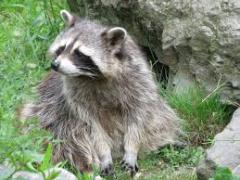
RACCOONS: If you observe a raccoon exhibiting unusual behavior, refrain from approaching it. Allow it plenty of space, and ensure children and pets are kept at a safe distance. Given time, the raccoon will likely move on by itself. Should a raccoon persistently linger on your property, contacting a pest control service is necessary for its removal. The municipality does not handle the removal of raccoons (or any wildlife) from private properties.
To safeguard your children and pets: Discourage raccoons from visiting your yard by avoiding leaving food out and securely sealing recycling and waste containers until collection day. Educate your children about the importance of not approaching wild animals. Keep your dog leashed when outdoors and check for raccoons before allowing pets outside in your yard. Ensure your pets are vaccinated against distemper, as raccoons may carry this disease.
Image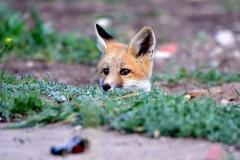
FOXES: Foxes typically take shelter in dense thickets or heavy brush, however, in breeding season, you may find foxes closer to human population. Between the end of March and early April, a mother fox will give birth to between 4 to 5 kits. To avoid predators, a mother fox will choose a den site close to people, away from where their predators generally go. By September, most foxes have moved back to their more remote dens.
Foxes are omnivores, consuming a large variety of small mammals, birds, eggs, insects as well as fruits, grasses, sedges and tubers. They will take advantage of garbage or carrion if available. They are unlikely to attempt to take prey over 3.5 kg and are most actively hunting in the early morning and late evening.
How to prevent/deter foxes at your property
Image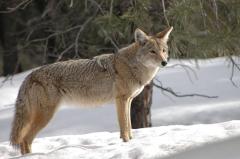
COYOTES: Coyotes feed mainly on small animals such as mice and rabbits. Unless they are sick or have been fed by humans, coyotes are generally shy, cautious and non-confrontational. They remain active throughout the year but are often seen during dawn or dusk, particularly between January and March. To prevent conflicts with coyotes, refrain from leaving food accessible on your property, leash your dogs, keep cats indoors, supervise children and small pets outdoors, and refrain from approaching coyotes.
How to prevent and manage encounters with coyotes
Image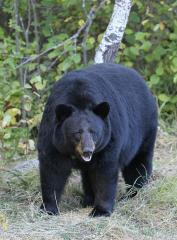
BLACK BEARS: There have been occasional sightings in the County of Wellington. Generally, black bears are not a threat to public safety, however the Ministry of Natural Resources Ontario Ministry of Natural Resources recommends contacting Bearwise at 1-866-514-2327 or in an emergency situation, call 911. More tips involving bear encounters can be found at http://Ontario.ca/bearwise
Contact Wellington North Power at 519-323-1710